Bitters are a small measure with a clear job: add aroma, bitterness and a particular flavor to the ingredients already in the glass. With PEYCHAUD’S, the place to start is the familiar Aromatic expression, a recipe you can follow, and a little attention to how you pour.
You do not need an elaborate home bar to learn the difference a dash makes. A measuring tool, ice, a mixing glass and a spoon are enough for the stirred drinks in this guide. The useful skill is consistency. When you know what went into the first drink, you can make a thoughtful adjustment to the next one.
First, understand the flavoring
PEYCHAUD’S Aromatic bitters have a distinctive red color and an anise-led profile, with woodsy and gently sweet impressions. The product descriptions also identify licorice, peel and caramel notes. These are flavor descriptions, not an ingredient list. A note of caramel does not establish a quantity of sugar, and an anise impression does not tell you every botanical in the formula.
Read the label on the bottle you receive if an ingredient matters to you. Do not use a short flavor description to make an allergy decision. Labels and formulations deserve a fresh check when you replace a bottle, especially if you are comparing different expressions or buying for someone else.
Bitters occupy a different role from the main liquid in a drink. They are concentrated seasoning, usually measured in dashes. Adding more does not simply intensify the same finished cocktail. It changes the balance: the aromatic notes may become dominant, the color can deepen, and the bitter finish can outlast the other ingredients.
For a first attempt, follow a complete recipe rather than adding bitters to an unmeasured mixture. The recipe gives the small measure a context. Two dashes alongside two ounces of a base ingredient are a different decision from two dashes in a large pitcher.
What does a dash mean?
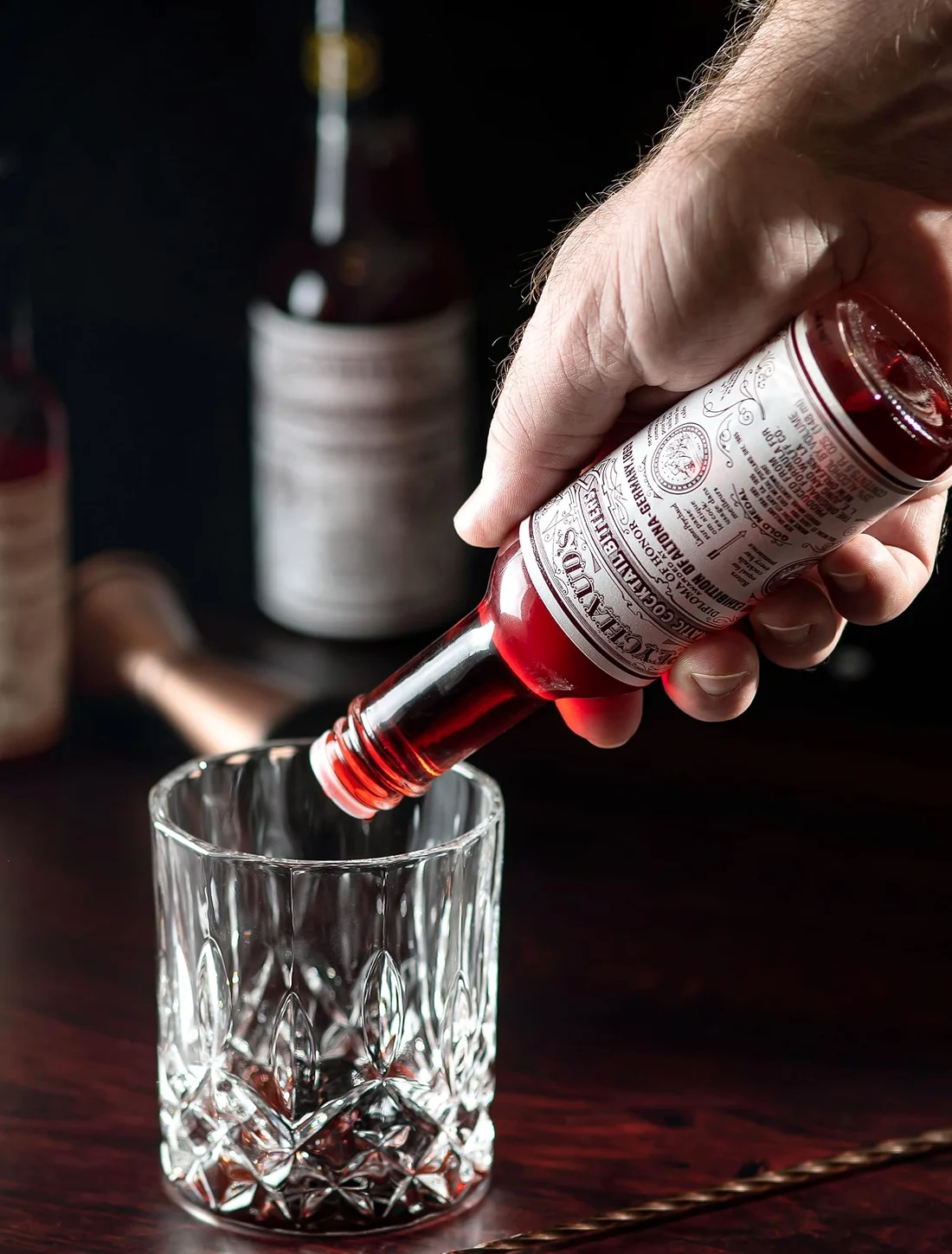
A dash is a quick, small pour through the bottle’s restricted opening. It is not a precise universal volume. Bottle design, fullness, angle and the force of the motion can change the amount that comes out. Treat a recipe’s dash count as a practical instruction tied to a consistent pouring motion.
Hold the bottle over the mixing vessel, turn it down with a controlled motion, then bring it upright again. Repeat the same movement for each dash. Avoid holding it upside down and counting while liquid continues to flow. That turns separate dashes into an unmeasured stream.
When you open a new bottle, a small practice pour into a spoon or empty measuring cup can help you understand the dispenser. You are looking for a repeatable movement, not a promise that every dash will equal a fixed fraction of a teaspoon. Different bottles can behave differently even when they contain the same expression.
Write down the number of dashes used in a recipe you enjoy. If you later transfer bitters to a different dispenser, treat that change as a reason to recheck the result. A decorative dropper bottle may release drops rather than the larger dashes assumed by the recipe.
Choose the bottle around your routine
The classic Aromatic expression is available here in 5 fl oz and 10 fl oz bottles, plus a pack of three 10 fl oz bottles. The larger single bottle contains twice the volume of the smaller one. The three-pack contains 30 fl oz in total. Those quantities describe what you buy, not a recommended serving size.
A 5 fl oz bottle makes sense when you are learning a few recipes, have limited shelf space, or want to compare Aromatic with Barrel-Aged. You can work through the familiar expression without committing to several bottles at once. A larger bottle may suit a regular routine, but it does not need a larger dose per drink.
For a multipack, think about how many bottles you want open. Keeping a sealed spare is different from having several partly used bottles. Before ordering, check the selected size, count and total price in the purchase tab. A product photograph can emphasize one bottle even when the option contains several.
| Format | What it contains | Useful distinction |
|---|---|---|
| Aromatic 5 fl oz | One smaller bottle | A compact starting format |
| Aromatic 10 fl oz | One larger bottle | Twice the volume, same expression |
| Aromatic three-pack | Three 10 fl oz bottles | 30 fl oz total, separate bottles |
| Barrel-Aged 5 fl oz | One bottle of the aged expression | A different expression, not another pack size |
Build a useful tasting reference
Choose one straightforward recipe and make it the same way twice before changing it. Measure the base ingredient and sweetener. Use similar ice, the same glass and the same bitters bottle. This gives you something concrete to compare, instead of relying on a memory of a drink made with different ingredients.
When you do make an adjustment, change one thing. If the first version needs a more pronounced aromatic finish, try one additional dash in the next. Keep the sweetener and base measures unchanged. If you increase the syrup, switch the whiskey and add more bitters at once, you will not know which change you preferred.
Taste the drink after it is chilled and diluted. A warm mixture in the bottom of a glass will not taste like the finished serving. Ice contributes water as well as temperature, and that water changes the concentration of every ingredient. A drink that initially seems sharp can become more integrated after proper stirring.
You can keep a short notebook with the recipe name, ingredient measures, dash count and one sentence about the result. Useful notes are specific: “the anise finish was too strong” tells you more than “not right.” There is no need to invent a score or adopt someone else’s preferred balance.
Stirring, chilling and dilution
Stirred drinks benefit from having the equipment ready before you measure. Put the serving glass somewhere to chill, arrange the ingredients, and fill the mixing vessel with ice when you are ready to work. This prevents the first ingredients from sitting on melting ice while you look for the rest.
Add the measured liquids and bitters, then stir smoothly. The goal is to chill and combine them while adding water from the ice. Keep the spoon moving around the inside of the vessel rather than crushing the cubes. Different ice sizes and starting temperatures mean that a fixed number of seconds is only a starting point.
When the mixture is cold, taste a small sample with a clean spoon. Strain into the prepared glass. For a drink served over ice, use fresh ice in that glass rather than transferring the wet mixing ice. For a Sazerac served without ice, a chilled serving glass helps preserve the temperature after straining.
Bitters cannot compensate for every mixing problem. If the drink is too warm, chill it properly. If it is too sweet, check the syrup measure and strength. If it is watery, review the time spent on ice. Adding more seasoning to an underlying balance problem can make the result harder to interpret.
The Sazerac as a first recipe
The Sazerac is a useful place to meet Aromatic bitters because the ingredient list is short and each part has a clear role. Rye provides the base, syrup supplies sweetness, a small absinthe rinse contributes aroma, and the bitters connect the mixture with a distinctive aromatic finish.
Rinse the chilled glass lightly and discard the excess liquid. The purpose is to coat the surface. Leaving a puddle changes the recipe, sometimes dramatically. Measure the rye and syrup into a separate mixing glass, add the bitters, fill with ice, and stir before straining into the rinsed serving glass.
Express a lemon peel over the surface to release its oils. Aim the colored outer surface toward the drink and give it a gentle bend. This is a garnish step, not a substitute for lemon juice. Adding juice would change the acidity and create a different recipe.
If you are learning, resist the urge to modify every detail after the first sip. Consider the serving temperature, sweetness and intensity of the rinse before deciding that the bitters need adjustment. Make a small, deliberate change next time and keep the rest of the recipe stable.
Two ways to widen the repertoire
The Vieux Carré adds another layer of comparison. Rye, cognac and sweet vermouth share the main structure, with a smaller measure of herbal liqueur and two types of bitters. It illustrates why a named bitters ingredient should not automatically be treated as interchangeable with another brand or expression.
Use the two specified bitters in the recipe before experimenting. Pay attention to the vermouth too: an opened bottle deserves appropriate refrigerated storage and a check before mixing. Bitters have an important role, but they are not a way to conceal an ingredient that no longer tastes as it should.
For a simpler variation, try our Creole Old Fashioned. It keeps the familiar whiskey, sweetener and bitters structure while using Aromatic bitters for a different aromatic direction. We describe it as a variation because that is the useful distinction; it is not presented as the original historical formula.
These recipes offer different contexts for the same bottle. Comparing the short ingredient list of the Sazerac with the layered Vieux Carré can teach you more than continually increasing the bitters in one drink. Follow the recipes at their stated scale first, then make a note of what you would change.
When to try Barrel-Aged
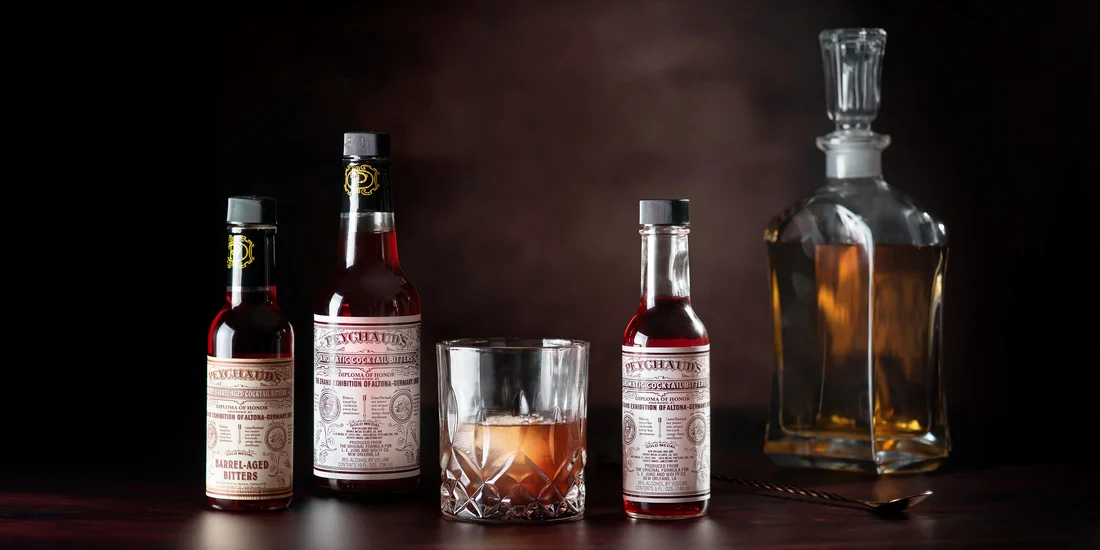
The Barrel-Aged expression is identified separately because barrel aging is a meaningful product difference. Choose it when you want to explore that expression, rather than assuming it is a larger or stronger version of the classic. The bottle shown here contains 5 fl oz.
Begin with a recipe you already know. Substitute the same measured dash count and keep the other ingredients unchanged for the first comparison. This approach makes the experiment understandable. If you also choose a different whiskey or sweetener, you are comparing whole recipes rather than the two bitters.
A product name does not settle your preference. You may like the classic in one recipe and the aged expression in another. Nor does the label alone justify a claim about an exact aging period, barrel source or chemical composition. Those details need specific information from the producer.
Keep the two bottles identifiable on the shelf. Check the front label before measuring, particularly if you use a dimly lit mixing area. A small organizational habit is more reliable than trying to distinguish similar bottles by shape alone.
Scaling a recipe with care
Make a successful single serving before multiplying a recipe. Write out the measures for each ingredient and use the same units throughout. It is easy to multiply the main ingredient and overlook a small measure, or to confuse a teaspoon with a tablespoon while moving between recipes.
For a small batch, begin by multiplying the established dash count using the same bottle and motion. Do not convert dashes into an assumed milliliter measure unless you have measured that particular dispenser. A dropper and a dasher top do not create the same amount just because the recipe uses a small number.
Chilling and dilution also need attention when scaling. Multiplying the ingredients does not automatically reproduce the water contributed by stirring a single serving with ice. For a gathering, testing the scaled method ahead of time is more useful than making a first attempt as guests arrive.
Label any prepared mixture clearly, keep it stored appropriately for its ingredients, and keep alcoholic and alcohol-free preparations separate. The bitters in this collection contain alcohol. A small quantity of bitters does not make a recipe alcohol-free, even when the other ingredients are not alcoholic.
A modest set of useful tools
A jigger gives you a clear reference for ounces and smaller liquid measures. Check the markings on yours before starting, especially if the two ends have different capacities. A bar spoon is useful for stirring and small measures, but an ordinary teaspoon and a long spoon can cover much of the same work when the recipe gives those units explicitly.
Choose a mixing vessel with room for both liquid and ice. Filling it to the rim makes stirring awkward and encourages spills. A separate strainer helps hold back the used ice when you pour. Have the serving glass ready before that moment, so the finished mixture does not sit while you search for one.
A peeler or small knife can prepare a citrus twist. Wash the fruit, remove a strip of the outer peel, and avoid taking an unnecessarily thick layer of white pith. Keep sharp tools on a stable surface and prepare the garnish before the glass is full. The peel’s aroma works at the surface; a large wedge is a different garnish with a different effect.
None of these tools changes the recommended amount of bitters. A beautiful mixing glass is pleasant to use, but measured ingredients and consistent technique do the practical work. Build your equipment around the recipes you make instead of assuming that a longer tool list produces a better result.
Read the whole drink before adjusting
If a finished drink seems too sweet, first check whether your syrup uses equal parts sugar and water or a richer ratio. The same volume of two syrups can contribute different amounts of sugar. Changing the bitters to compensate may add a stronger aromatic finish while leaving the extra sweetness in place.
If the aroma seems faint, check the garnish and serving temperature as well as the bitters. A dry, old piece of citrus peel will not express oils like a fresh one. A different glass shape can also change the way aromas reach you. These observations are reasons to compare carefully, not to assume that the bottle has lost its flavor.
If a recipe tastes unfamiliar, reread the expression names and the small measures. Aromatic and Barrel-Aged are separate choices. A teaspoon of an herbal liqueur is not an ounce, and a rinse is not a full ingredient measure left in the glass. Small transcription errors can matter more than a one-dash adjustment.
Finally, consider whether you are trying to reproduce a specific recipe or develop a variation you enjoy. Both are reasonable aims, but they call for different notes. For reproduction, follow the stated ingredients and measures. For a variation, record your changes so the version you prefer can be made again without guesswork.
Storage, labels and the next bottle
Keep the bottle upright, closed and away from direct heat or sunlight. Wipe the neck after pouring so sticky residue does not build up around the closure. Store bottles where they are secure and out of children’s reach. These are practical handling habits; follow any more specific directions printed on the current label.
When a delivery arrives, check the bottle count, size, expression and seal before discarding the packaging. If a bottle is broken or leaking, use the order-help options in the account used for the purchase. Keep the order details and clear photographs available when reporting the issue.
Do not assume every ingestible product can be returned in the same way as an unused household item. Eligibility and remedies depend on the order and its seller. Our delivery and returns guide explains where to find the options attached to the actual transaction.
Before replacing your bottle, revisit the format that suited your routine. There is no need to move to a multipack simply because you know more recipes now. Choose the expression and quantity you want, confirm the final price and selected option in the purchase tab, and keep your best recipe notes close to the mixing glass.